


Living in Spain
Living in Spain as a chef or hospitality professional
Are you considering living in Spain and working in hospitality – for example as a chef, cook,
kitchen assistant, waiting staff, cleaner, bar staff or hotel employee?
In this practical guide you’ll find everything you need to know about
living in Spain: registration, housing, healthcare, taxes and daily life,
before you make the move.
1. Administrative & legal requirements
Identification
- A valid EU passport or national ID card is sufficient for EU citizens.
NIE number (Número de Identidad de Extranjero)
- The NIE number is mandatory for living and working in Spain, renting housing,
opening a bank account and paying taxes. - You can apply through the Spanish police or via the Spanish consulate.
Registration at your address (Empadronamiento)
- After moving to Spain, you must register at the local town hall (Ayuntamiento).
- This registration is required for healthcare, social security and other official matters.
Diplomas and qualifications
- Hospitality diplomas are usually not required in Spain.
- Practical experience is often more important than formal certificates.
2. Housing & accommodation in Spain
Rental contracts
- Always try to get a written rental contract in your own name.
- This is essential for registration, healthcare access and social benefits.
Staff accommodation
- Some employers offer staff housing.
- Always check:
- monthly rent or deductions from salary;
- contract duration;
- whether official address registration is allowed.
Regional differences
- Living costs vary strongly between Spanish regions.
- Major cities and coastal areas are generally more expensive than inland regions.
3. Healthcare, taxes & social security
Healthcare in Spain
- Spain has a public healthcare system (Seguridad Social).
- With a legal employment contract, you are automatically insured.
- You receive a regional health card (Tarjeta Sanitaria).
Taxes and salary
- Income tax (IRPF) is deducted directly from your salary.
- Tax rates depend on income level and region.
Pension and social security
- Social security contributions are paid by employer and employee.
- Working and living in Spain builds up pension rights within the EU.
4. Border situations & international workers
- Living in one country and working in Spain can lead to complex tax situations.
- If you work for multiple employers or across borders,
professional tax advice is strongly recommended.
5. Lifestyle & culture in Spain
Daily life in Spain follows a different rhythm than in many Northern European countries.
Social life, flexibility and personal relationships play a central role, both at work
and outside working hours.
Work rhythm & work–life balance
In Spanish hospitality, long working days are common, especially in tourist areas.
Split shifts (working in the morning and again in the evening) are typical.
At the same time, social life is highly valued and often intertwined with work.
Daily schedule & eating habits
Meals happen later than in many other countries.
Lunch is often between 14:00 and 15:30, while dinner usually starts after 21:00.
This affects working hours, breaks and social life.
Communication & relationships
Communication in Spain is personal, expressive and informal.
Trust and relationships are important.
Instructions and agreements may sometimes be flexible rather than rigid,
which requires adaptability.
Language & integration
Spanish language skills are essential, especially outside tourist areas.
Even basic Spanish significantly improves daily life, work relations
and interaction with authorities.
Leisure, festivals & public life
Outdoor life plays a major role: terraces, plazas and beaches are social hubs.
Local festivals and public holidays are widely celebrated and can strongly
influence working hours and opening times.
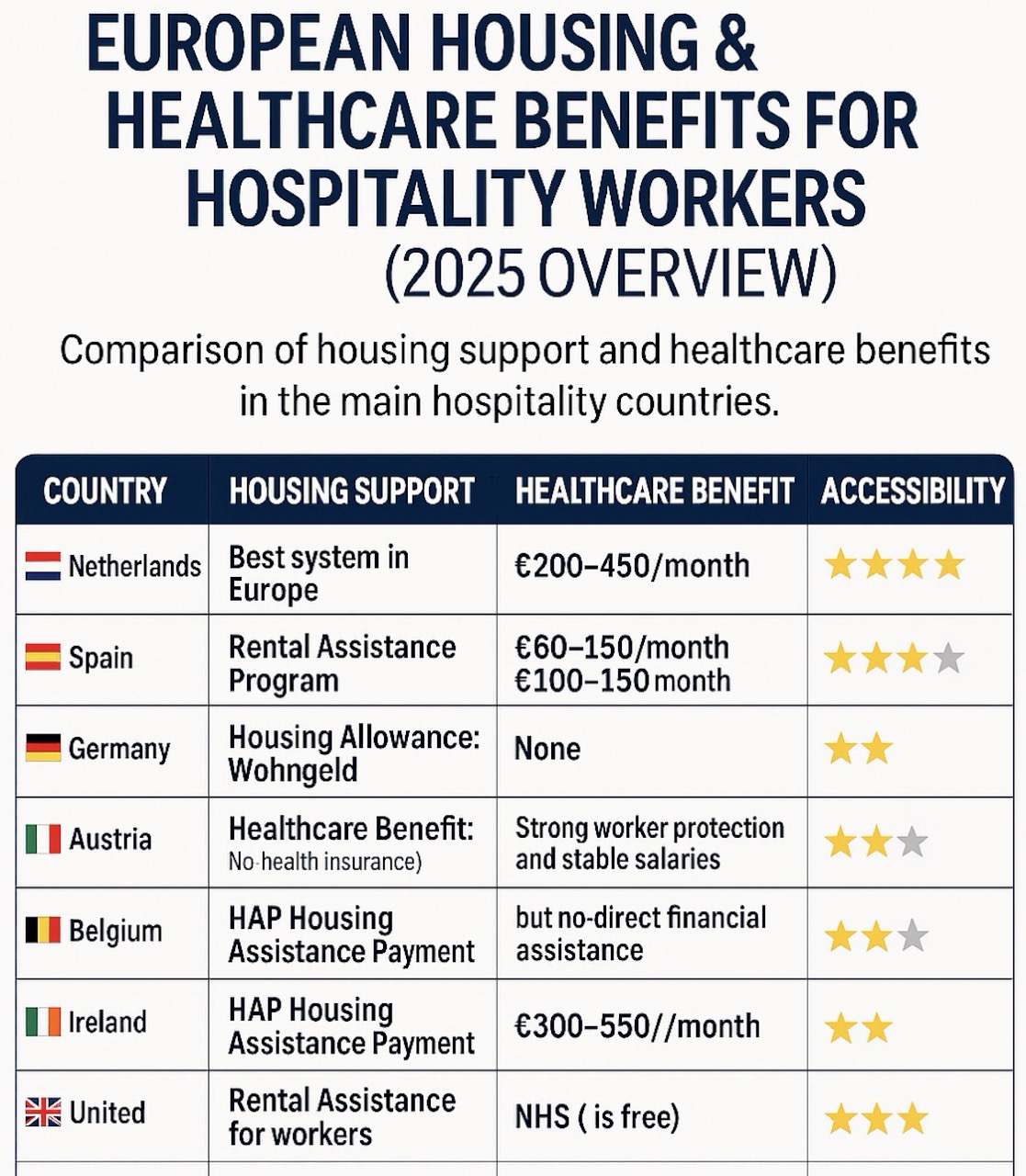
Housing & healthcare benefits in Spain:
Spain – housing & healthcare benefits for hospitality workers
6. Spain in a European context
Spain combines a strong hospitality culture with affordable living costs in many regions.
On our overview page you can compare Spain with other European countries:
Hospitality benefits in Europe
7. Join our international community
Want to learn more about living and working in European hospitality?
Join our international community: